

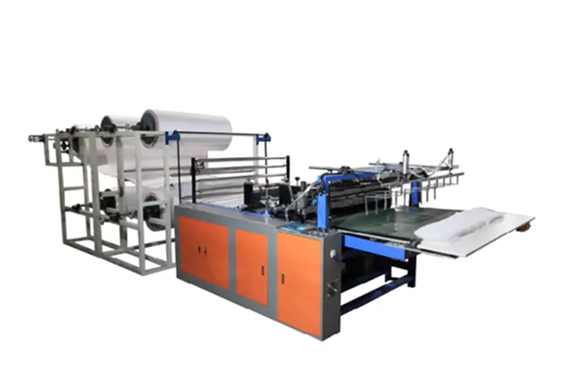
The Automatic EPE Machine for EPE Foam Roll Production is a specialized industrial solution designed to convert raw expanded polyethylene (EPE) materials into high-quality foam rolls with consistent thickness, stable density, and smooth surface finish. In modern packaging, insulation, protective wrapping, cushioning, and lightweight industrial applications, EPE foam roll production has become one of the most important processing segments in the foam manufacturing industry.
As demand grows for recyclable, lightweight, shock-absorbing, and cost-efficient packaging materials, manufacturers increasingly rely on automated EPE foam roll production systems to improve output efficiency, reduce labor dependency, and maintain product consistency. An automatic EPE machine for foam roll production can support continuous operation, precise control, and scalable manufacturing, making it suitable for factories serving packaging, electronics, logistics, building materials, household goods, and custom industrial applications.
This guide provides a complete, SEO-friendly overview of the automatic EPE machine used in EPE foam roll production, including definitions, working principles, major advantages, technical specifications, processing flow, material characteristics, common applications, and purchasing considerations. The information below is industry-focused and general-purpose, suitable for blog pages, product category pages, industry landing pages, and content hubs.
An automatic EPE machine for EPE foam roll production is a manufacturing system that processes expanded polyethylene foam into continuous rolls. These rolls are typically wound after extrusion, cutting, cooling, shaping, and surface stabilization. The machine is designed to automate key steps in the production process so that the final foam rolls maintain uniform width, thickness, length, and physical performance.
EPE, also known as expanded polyethylene foam, is a flexible, closed-cell foam material widely used for cushioning and protective packaging. Compared with many traditional packaging materials, EPE foam is lightweight, water-resistant, impact-absorbing, and easy to process. The automatic EPE machine helps manufacturers achieve efficient roll output while keeping quality stable across long production runs.
In practical terms, the machine is used to make EPE foam rolls, EPE sheet rolls, foam packaging rolls, and protective roll materials for both industrial and commercial use. Depending on the configuration, the line may include feeding systems, extrusion units, heating sections, cooling devices, shaping components, traction systems, trimming equipment, and automatic winding systems.
EPE foam roll production plays a vital role in industries that require reliable surface protection and impact resistance. Because EPE foam rolls are flexible, easy to cut, and convenient to store, they are frequently used for wrapping delicate goods, protecting product surfaces, filling gaps, and reducing damage during transportation.
The market demand for foam rolls is driven by several practical factors:
Automatic production technology is especially valuable because it allows factories to produce EPE foam rolls continuously, with better consistency than manual or semi-manual systems. For manufacturers targeting stable output and uniform quality, an automatic EPE machine is a strategic investment in productivity and operational control.
The production process for EPE foam rolls usually begins with raw material preparation and ends with finished roll winding. While machine designs may vary, most systems follow a similar workflow. The automation level may include temperature control, feed control, thickness regulation, traction adjustment, and winding synchronization.
| Step | Process Description | Purpose |
|---|---|---|
| 1. Raw Material Feeding | Polyethylene granules and auxiliary additives are fed into the system. | Prepare the base material for foaming and extrusion. |
| 2. Melting and Mixing | Materials are heated and mixed in the extrusion section. | Ensure uniform compound consistency. |
| 3. Foaming and Extrusion | The material is expanded and extruded through a mold or die system. | Create the foam structure and desired profile. |
| 4. Shaping and Cooling | The foam passes through shaping and cooling sections. | Stabilize dimensions and surface quality. |
| 5. Thickness and Width Control | Automatic control systems regulate output dimensions. | Maintain product uniformity. |
| 6. Trimming and Slitting | Excess edges may be trimmed and the roll width adjusted. | Produce clean, market-ready roll products. |
| 7. Automatic Winding | The finished foam is wound into rolls under controlled tension. | Create neat, compact, easy-to-handle foam rolls. |
| 8. Packaging and Storage | Finished rolls are packed for shipment or warehouse storage. | Protect finished products and streamline distribution. |
An automatic EPE machine for foam roll production usually consists of several interconnected systems. Each system contributes to production stability, product accuracy, and operating efficiency.
| Component | Function | Importance in Production |
|---|---|---|
| Feeding System | Delivers raw materials to the processing section in a controlled manner. | Ensures continuous and stable input. |
| Extruder Unit | Melt-mixes the material and prepares it for foaming. | Determines core processing quality. |
| Heating System | Maintains required temperatures for material transformation. | Supports consistent foaming and extrusion behavior. |
| Die/Mold Assembly | Shapes the material into the desired foam profile. | Controls final form and structure. |
| Cooling Section | Stabilizes the newly formed foam. | Prevents deformation and quality issues. |
| Traction Unit | Pulls the foam through the production line at a steady speed. | Maintains smooth and even processing. |
| Thickness Control System | Adjusts the output to meet desired thickness levels. | Improves product consistency. |
| Automatic Winder | Collects finished foam into rolls with controlled tension. | Essential for commercial roll production. |
| Control Panel / PLC System | Manages automation settings, speed, temperature, and output parameters. | Enables precise and efficient operation. |
Automatic production systems offer a wide range of operational and commercial benefits. These advantages make them especially suitable for manufacturers that need stable output, lower labor costs, and a more professional product line.
Automation allows the machine to operate continuously with minimal manual intervention. This increases daily output and improves production scheduling. For businesses with strong market demand, high-efficiency foam roll production can significantly improve order fulfillment capacity.
One of the most important benefits of an automatic EPE machine is consistency. Automated controls help maintain the same roll width, thickness, density, and winding tension across batches. This is especially valuable for customers who require standardized packaging materials.
Compared with manual systems, an automatic EPE foam roll production line requires less direct labor input. Operators mainly monitor the machine, adjust parameters, and supervise the process rather than performing repetitive tasks manually.
Accurate control of feeding, extrusion, and winding helps reduce waste and improve raw material usage. Lower material loss means better cost control and more sustainable production.
Automatic EPE machines are designed for long production cycles. Stable operation is important for industrial facilities that need uninterrupted roll production and consistent supply to distributors, packaging companies, and downstream users.
Depending on machine configuration, manufacturers can produce foam rolls in different widths, thicknesses, densities, and surface finishes. This flexibility makes the line suitable for multiple markets and custom orders.
When key parameters are automated, it becomes easier to monitor and control final product quality. This is important for maintaining customer trust and reducing returns or production defects.
EPE foam rolls are used in many fields because of their softness, flexibility, and shock-absorbing properties. The material can be cut, laminated, or shaped according to specific user needs.
| Application Area | Typical Use | Why EPE Foam Rolls Are Suitable |
|---|---|---|
| Packaging Industry | Wrapping fragile products, internal packaging, cushioning inserts. | Protects goods from impact and scratching. |
| Logistics and Shipping | Protective wrapping for transport and warehouse handling. | Lightweight and easy to use. |
| Electronics | Surface protection for devices, components, and accessories. | Reduces vibration and contact damage. |
| Furniture | Surface covering, corner protection, and anti-scratch wrapping. | Flexible and easy to cut into custom sizes. |
| Construction | Insulating and cushioning applications. | Provides lightweight, water-resistant support. |
| Household Goods | Protective layers for ceramic, glass, and decorative items. | Offers soft cushioning and moisture resistance. |
| Automotive Parts | Protection for parts and components during storage and shipment. | Absorbs shock and prevents surface damage. |
| Cold Chain / Storage | Auxiliary cushioning and protective packaging layers. | Useful in lightweight protective packaging systems. |
EPE foam rolls are popular because they combine physical flexibility with protective performance. When produced through a stable automatic line, the material delivers reliable characteristics that appeal to many industries.
Technical specifications vary depending on line design, production capacity, and target product requirements. The table below shows common industry reference specifications for an automatic EPE foam roll production machine. These values are general examples and should be used as a benchmark for content and planning purposes.
| Specification Item | Typical Range / Example | Notes |
|---|---|---|
| Production Type | Automatic EPE foam roll production line | Designed for continuous roll output. |
| Material | Expanded polyethylene (EPE) | May include auxiliary additives depending on formulation. |
| Roll Width | Customizable, common range 500 mm – 3000 mm | Depends on application and machine setup. |
| Foam Thickness | Approx. 1 mm – 50 mm | Specific output depends on mold and process settings. |
| Output Speed | Varies by model and product spec | Automation helps improve line efficiency. |
| Control System | PLC-based automatic control | Supports temperature, speed, and tension management. |
| Winding System | Automatic or semi-automatic winding | Ensures neat roll formation. |
| Heating Method | Electric heating or other industrial heating methods | Selected according to process design. |
| Cooling Method | Air cooling or water-assisted cooling | Helps stabilize foam quality. |
| Machine Structure | Heavy-duty industrial frame | Supports stable continuous operation. |
| Power Configuration | Depends on line capacity and function set | Should match factory infrastructure. |
| Automation Level | Fully automatic / high-automation system | Reduces manual intervention. |
The quality of foam rolls depends on machine performance, process stability, raw material formulation, and environmental control. Manufacturers aiming for premium output should pay attention to the following factors:
Compared with manual and semi-automatic production, an automatic EPE machine offers stronger performance in large-scale production environments. The differences are especially visible in labor needs, output stability, and quality consistency.
| Comparison Item | Automatic EPE Machine | Manual / Semi-Automatic System |
|---|---|---|
| Labor Requirement | Lower | Higher |
| Output Consistency | High | Moderate |
| Production Speed | Faster and more stable | Slower, more variable |
| Material Waste | Reduced through control systems | Usually higher |
| Quality Control | Easier to standardize | Depends more on operator skill |
| Scalability | Suitable for large-scale production | Better for low-volume or limited operations |
| Operating Cost | More efficient over time | May become costly in labor-intensive settings |
Selecting the right automatic EPE machine requires attention to production goals, output specifications, factory conditions, and long-term business needs. A well-matched system can improve profitability, reduce operational issues, and support future expansion.
| Selection Factor | What to Consider | Why It Matters |
|---|---|---|
| Production Capacity | Expected daily or monthly output volume. | Ensures the machine can meet business demand. |
| Roll Size Range | Desired width, thickness, and length specifications. | Determines product compatibility. |
| Automation Level | Fully automatic or partially automatic operation. | Impacts labor needs and process efficiency. |
| Control Precision | Ability to manage temperature, speed, and winding tension. | Directly influences product quality. |
| Energy Use | Power efficiency and utility requirements. | Affects long-term operating cost. |
| Maintenance Design | Ease of inspection, cleaning, and component replacement. | Supports uptime and reliability. |
| Factory Layout | Available space and installation conditions. | Ensures proper line integration. |
| Future Expansion | Potential to upgrade or expand the production line. | Supports long-term business growth. |
To keep an automatic EPE machine running efficiently, regular maintenance and careful operation are essential. Good maintenance not only extends machine service life but also helps preserve output quality.
In addition, production records should be maintained for each batch. Monitoring output data, defect rates, and maintenance logs helps factories identify trends, improve process optimization, and reduce unexpected downtime.
The EPE foam roll industry continues to evolve as packaging and industrial users demand more efficient, functional, and adaptable materials. Several trends are shaping the future of automatic EPE machine adoption:
These trends make automatic EPE foam roll production systems highly relevant for manufacturers seeking to remain competitive in a demanding and fast-changing packaging market.
For content optimization, the following keyword variations are commonly associated with this subject and can be naturally integrated into related pages:
The Automatic EPE Machine for EPE Foam Roll Production is an essential industrial solution for manufacturers that need efficient, stable, and scalable foam roll output. By automating key steps such as feeding, extrusion, cooling, shaping, thickness regulation, and winding, the machine improves productivity while helping maintain consistent quality.
EPE foam rolls remain a widely used material in packaging, logistics, electronics protection, furniture wrapping, and industrial cushioning because they are lightweight, flexible, and cost-effective. As market demand continues to grow, automatic EPE foam roll production lines offer a practical way for manufacturers to increase capacity, reduce labor dependence, and improve product consistency.
Whether used for blog content, a directory page, an industry landing page, or a product information hub, the information above provides a strong SEO foundation for the topic of automatic EPE machine systems and EPE foam roll production. With the right production setup, businesses can support long-term growth, meet diverse customer requirements, and remain competitive in the packaging materials market.
```
如需,我还可以继续帮你补一版:
1. 更强SEO版本(关键词更密集、标题层级更像谷歌收录页)
2. 更像目录页/产品页版本(更适合直接放站内分类页)
3. 加FAQ schema文本版(便于做FAQ结构化数据)
4. 再扩展到3000+词的超长版
Telefone:+86 15253598306
E-mail:vendas@fushijixie.cn
Endereço:Zona Industrial de Langao, cidade de Longkou, província de Shandong, 265709, China


Direitos autorais © Longkou Fushi Packing Machinery Co., LTD. Todos os direitos reservados. Mapa do site
Este site usa cookies para garantir que você tenha a melhor experiência em nosso site.

 English
 Español
 Pусский
 Français
 العربية
 Türk dili
 Indonesia
 Tiếng Việt
 فارسی



 Telefone
Comente
(0)